

horst, 2026
belgium, the sun, unpretentiousness, vody, a scrunched up plastic bag , no phones in sight & physical by dua lipa

day 1
We arrived at the festival at 10PM and The Sun was still out, so we were anxious to get in. When we were let through, the bass drops and we’re thrown into a cloud of smoke.For some reason, it never crossed my mind to visit Brussels. Now, I don’t know why I waited so long. I should have visited earlier.
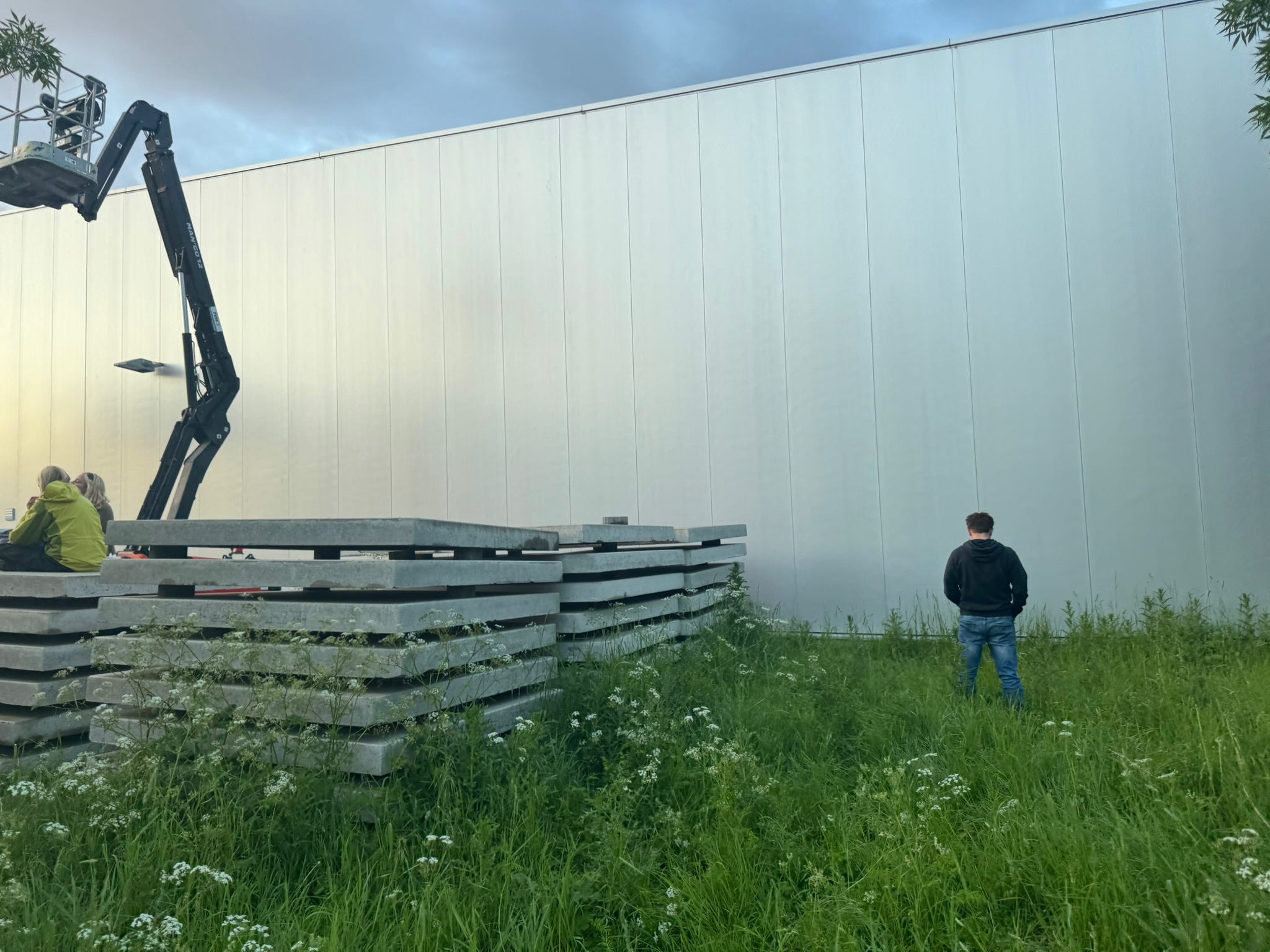
First and foremost, Belgians are unpretentious. Even in the hour of arrival, conversations wandered without any precarity, switching between French and Flemish slang and back to perfect English. Even with strangers, I found myself getting lost in interest. And we hadn’t even heard any music yet.
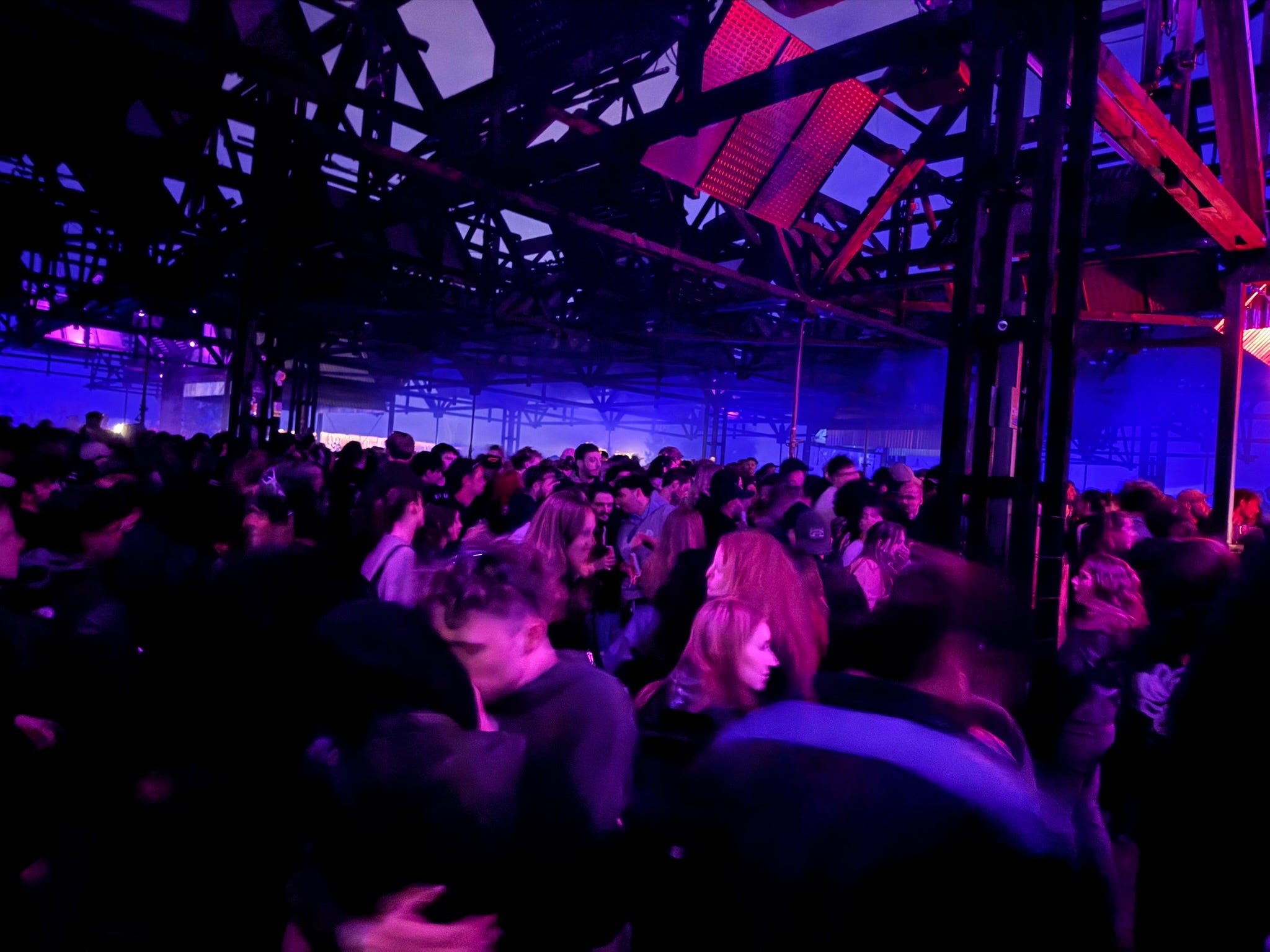
A cigarette gets passed my way, someone says ‘Metropol’s selling optimism’, and that was that. We were escorted to the new secret stage, titled Circus. Past dark PVC curtains, we were flung into a near pitch-black room swarming with hundreds of heads, gyrating hips, sweaty limbs, illuminated only by moving spotlights beaming up and out across multiple levels, beautifully revealing what I could only keep describing as ‘fucking crazy’, over and over. Immensely dense, and so, within minutes, I lose Lea, our photographer and Belgian guide, who had white-rabbited me this far.
DJ Rino was spinning. Then we went outside for a breather, under Dark Skies, the large unmissable stage out in the grass, speakers hanging literally from the sky, the air thick with purple shadows. The people, and all of us under this one roof, held a large sense of peace. I felt assured I was having a good time. And so the night spun into morning.
day 2. I’m surprised I don’t have a hangover.
So it’s my first proper time in Brussels, and we’ve got an interview with Selene, a music professional and co-founder of ELS, a platform for Belgian music based on community and cultural curation. We’re meeting at Sainte-Catherine, which she describes as the best intro to the city.
Having my first Belgian meal, the seafood here seems so precious. My second thought on Belgians: welcoming. Along with unpretentious. We do the dash past shopfronts and restaurants, every place as unassuming as the next but absolutely gorgeous inside. Belgian architecture is unpornographic. A beautiful townhouse next to a blank glass slab next to a motorway junction. Every space we entered seemed to be someone’s daily, even in an area that felt ‘blown up’ and ‘too exposed’, though that’s just my read as a Londoner who lives within walking distance of a Gail’s.
I’m noticing the divide between the Flemish-speaking and French-speaking halves of the country and I don’t understand it. Here’s a snapshot of the history: Belgium declared independence in 1830 and was formally established the following year, in 1831, stitched together from territories that had spent centuries passing between Dutch, French, Spanish, and Austrian hands. The new state ran on French, the language of its elite, even though most people in the north spoke Flemish. For a hundred years Flemish speakers were second-class in their own country, unable to be tried or schooled in their own tongue. The backlash built slowly, then hardened into law: a language border drawn across the map in 1962, splitting the country into Flemish-speaking Flanders in the north, French-speaking Wallonia in the south, and Brussels marooned in the middle, officially bilingual but in practice mostly French-speaking, with a Flemish minority of around ten percent.
The irony is in how the money changed hands. Wallonia was the rich half for most of that history, coal and steel country, the first industrialised region on the continent. Flanders was the poor agricultural north. Then the heavy industry collapsed in the back half of the twentieth century, and the wealth flipped. Flanders is now the prosperous one, its economy built on ports, logistics, and services, while Wallonia carries the rust-belt hangover.
Maybe I’m uneducated, but I don’t think the average person could tell the two apart.
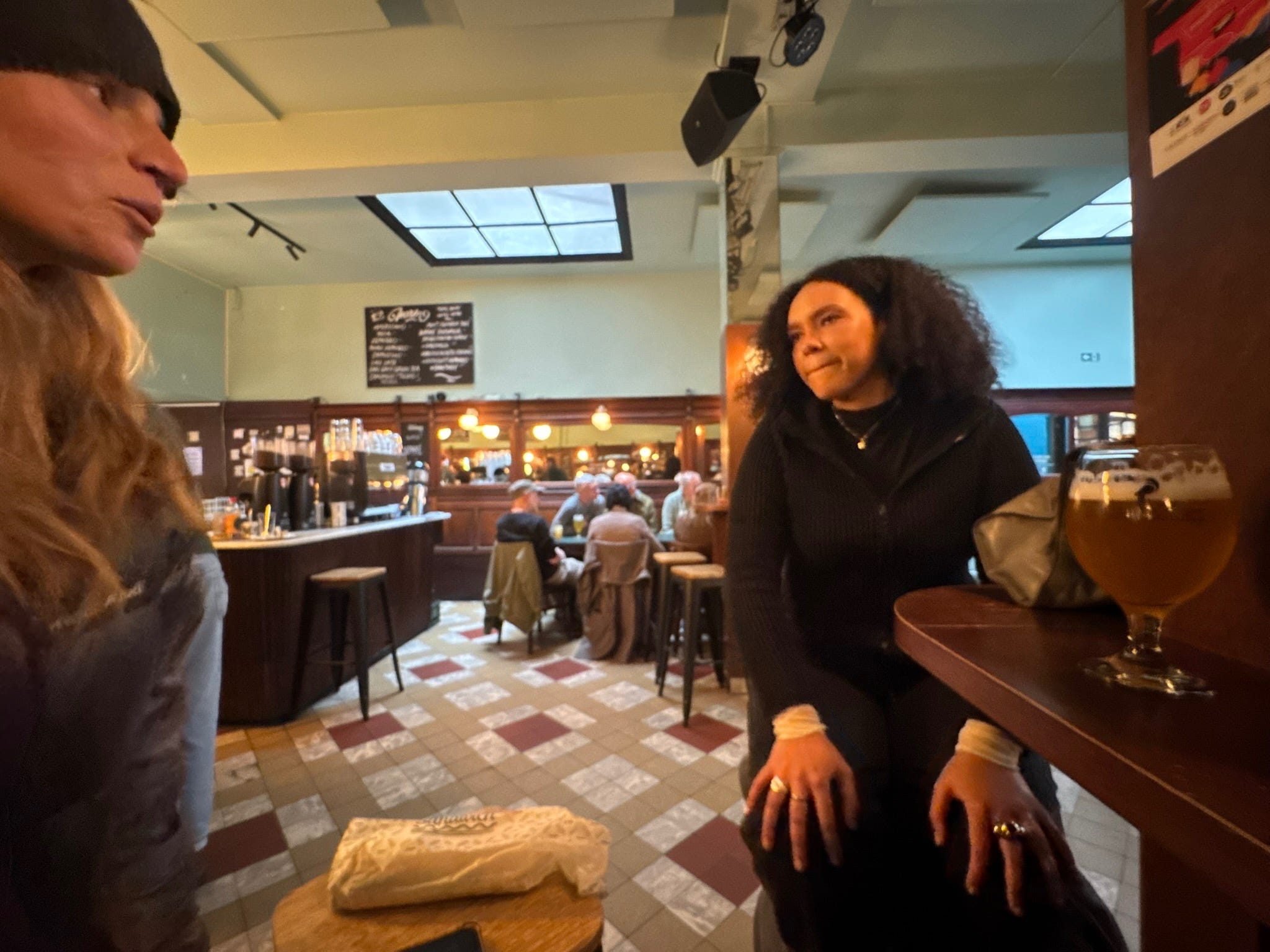
My first Belgian meal arrives by the hand of Lea, who introduces me to an Américain, a sandwich made from raw minced beef. It’s delicious.
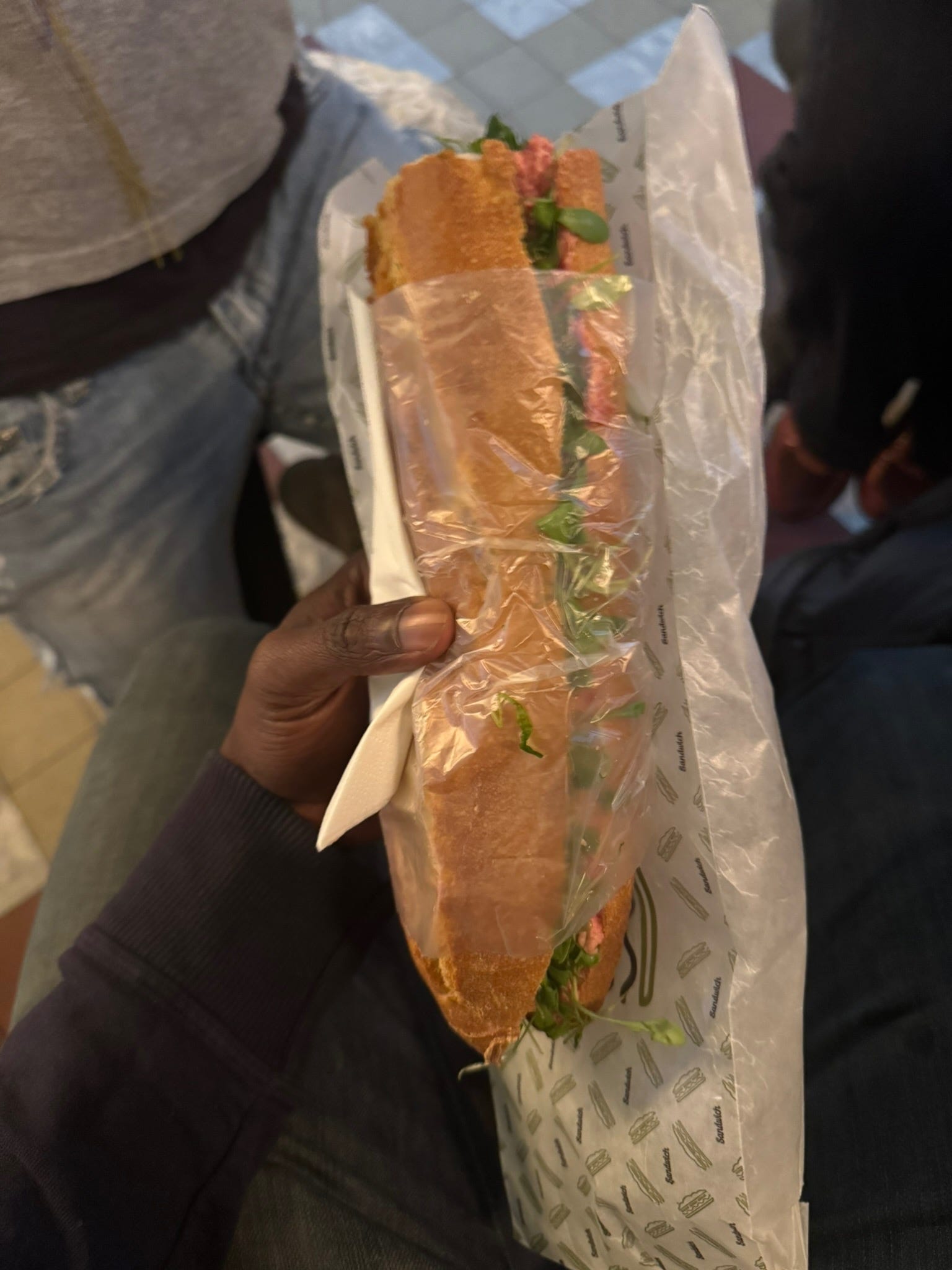
Then some number of beers, then travelled across town for our ride
We rode to the festival in the back of a catering delivery truck going over the limit. Travelling across town felt seamless, everything close together, the whole city scaled small enough to move through without thinking about it.
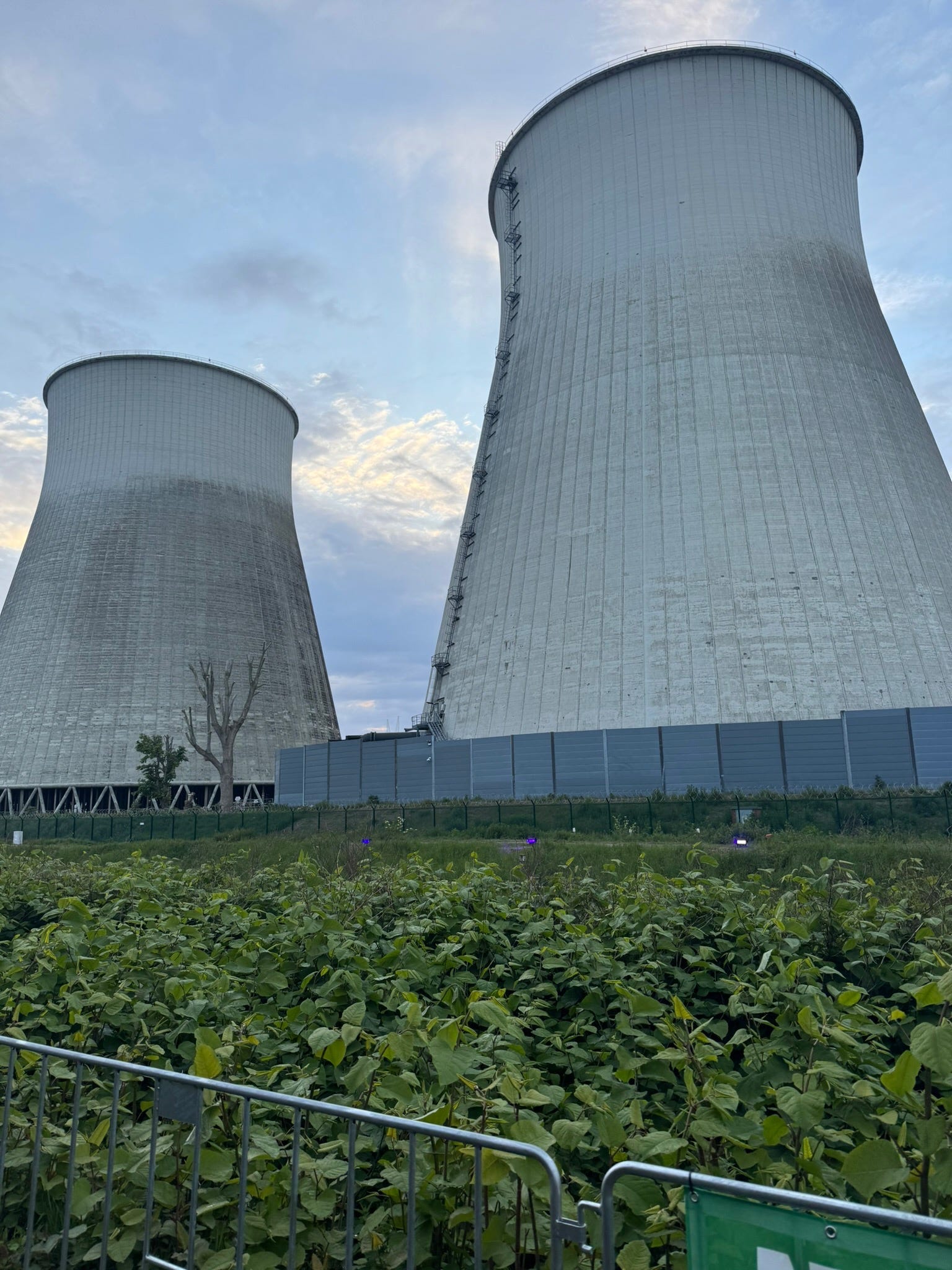
Horst sits in Asiat, a former military site on the edge of Vilvoorde, just north of Brussels. The name is an acronym: the Arsenal of Instruments and Equipment for Telecommunication, a base where, from 1946 to 2008, soldiers produced components for military telecommunication. The army’s technical unit had actually been on the land since the 1920s, and during the Second World War the buildings were occupied by the Germans. When the military finally left, the warehouses, barracks and driving courts were slowly taken over by nature, the site sitting empty before the City of Vilvoorde took it on. Horst moved here in 2019 and has been the cultural catalyst on the grounds since, regenerating the buildings and turning them into a kind of evolving laboratory, where architects are invited each year to build stages and structures that stay on as semi-permanent fixtures after the festival ends. You can still read the military bones in the place, the flat utilitarian buildings, the wide concrete aprons, and the two cooling towers standing over it all. There’s something good about a festival inhabiting a space that was never meant for joy.
A Vody in, and it was my first proper look at the stages. I’d missed them the night before, having spent most of it lost in a single room. So day one was partly just walking the grounds.
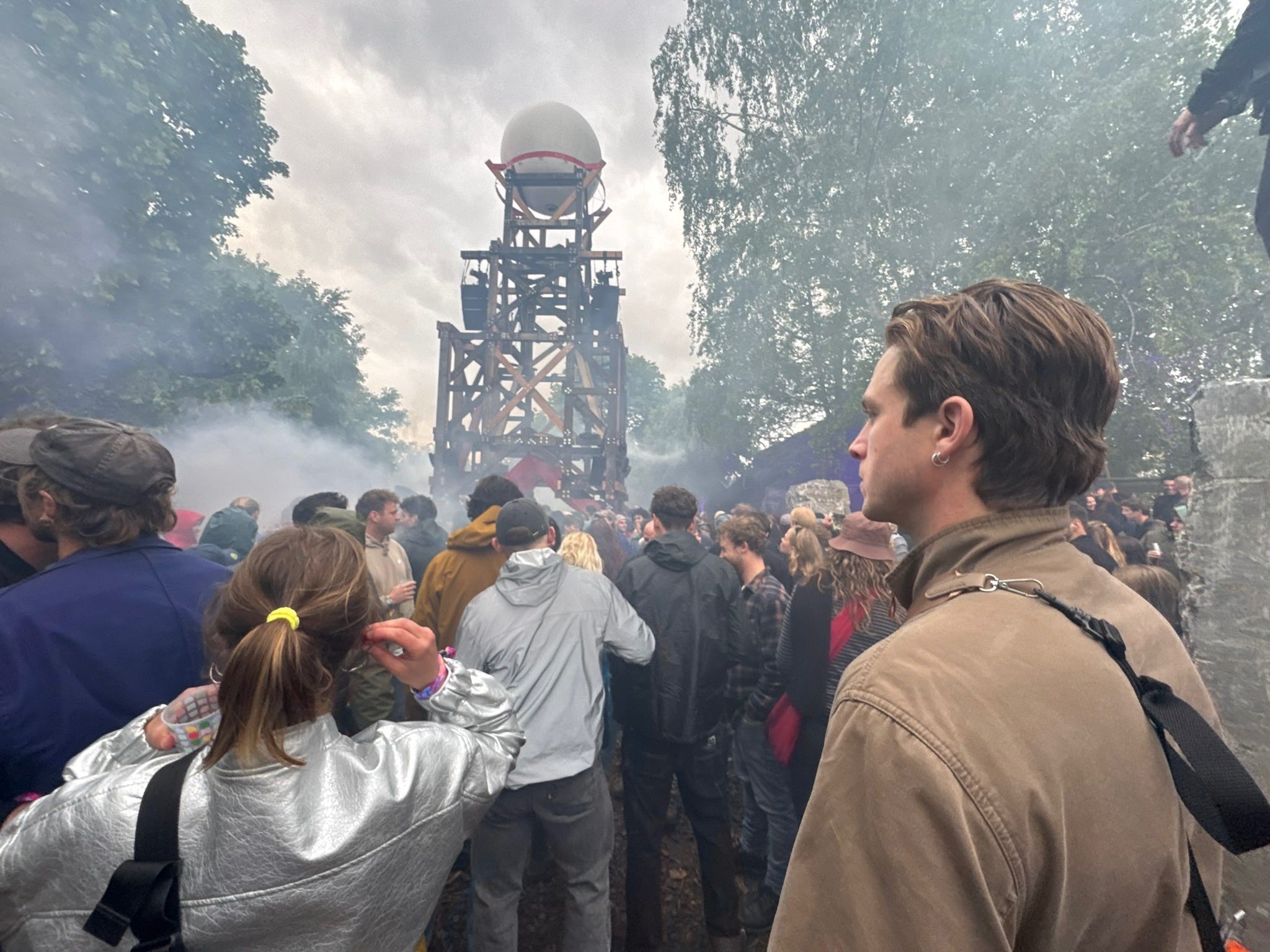
The Kiosk/Lot stage named ‘HoRAbaixa’ by Ted’A architects. It’s a big ball mounted on top of a wooden structure, frankly phallic, and built as a 360 stage. A lot of the stages were like this, made to be enjoyed from every angle rather than fixed to a single front, the crowd wrapped all the way around. Wife Mandala was playing, commandeering the crowd in dance. Le Soleil Rouge, designed by Bruther, featured a large reflective red circle that mirrored the audience below and in stadium stands. And the pit, officially Weaving Weeds. Everywhere the fog machines ran constant, so you were always standing inside a cloud, light cutting through it from whichever stage was nearest.
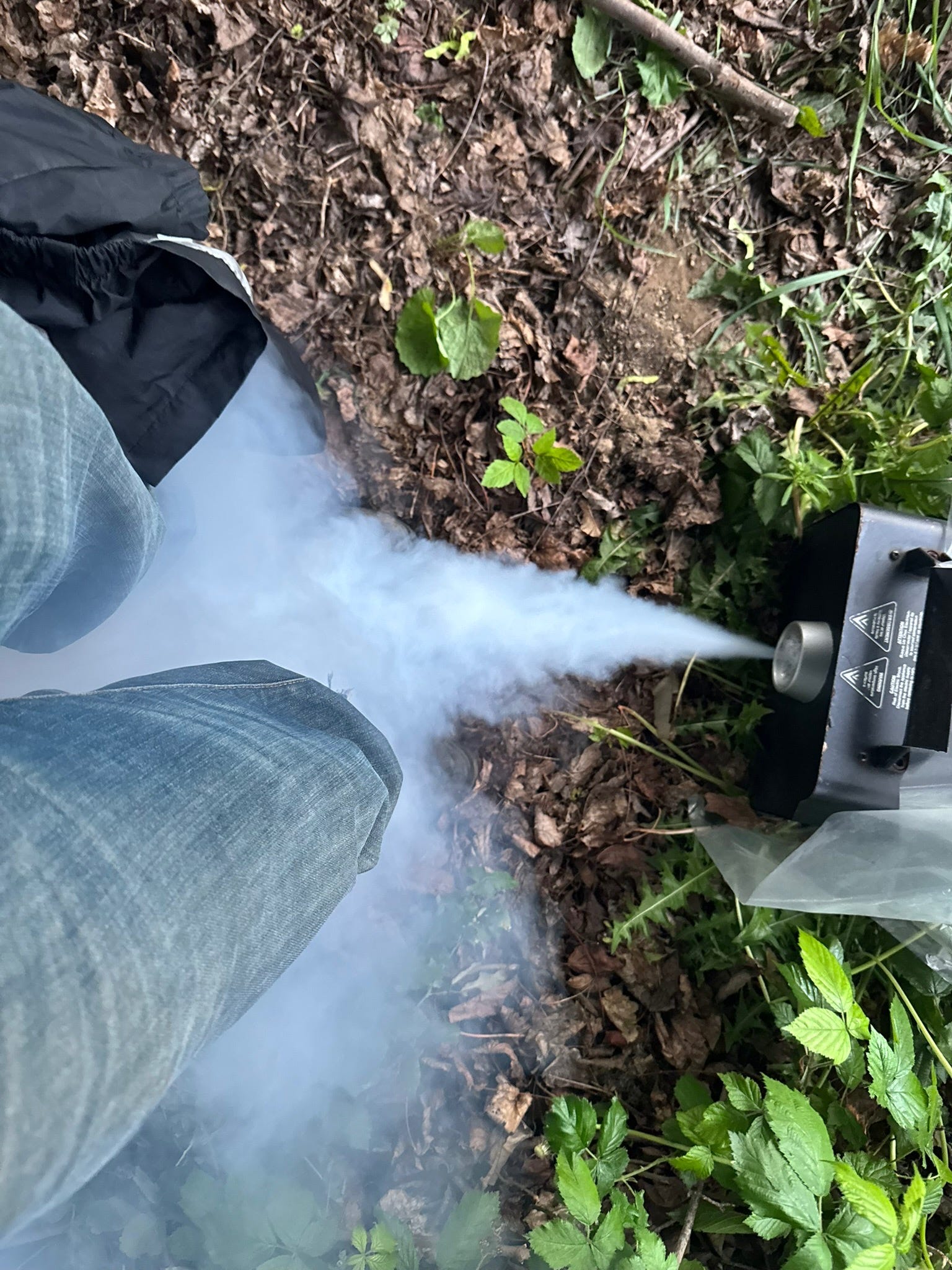
We were witnessing a rare modern moment, no phones around us or distractions, just an utmost state of presence.
Lea’s friends and the groups we kept running into gave the whole thing the feel of a small village. With over 10,000 attendees, you’d expect to disappear into the crowd, but the same characters surfaced each day. And our Belgians were always welcoming.
The pit, the music, the lights, the people, everyone there was pretty hot, and there seemed to be a deep, shared interest in everyone having a good experience. It came with a sense of responsibility, because you’re rewarded for being responsible, right down to the euro charge on each can that you get back when you return it. Small things like that make people want to take care of something that’s mostly flat in its organisation but relies on everyone’s cooperation to hold together.
day 3. final day.
Started at a bakery, which counts as sightseeing if a beautifully glazed donut counts as a sight to be seen.
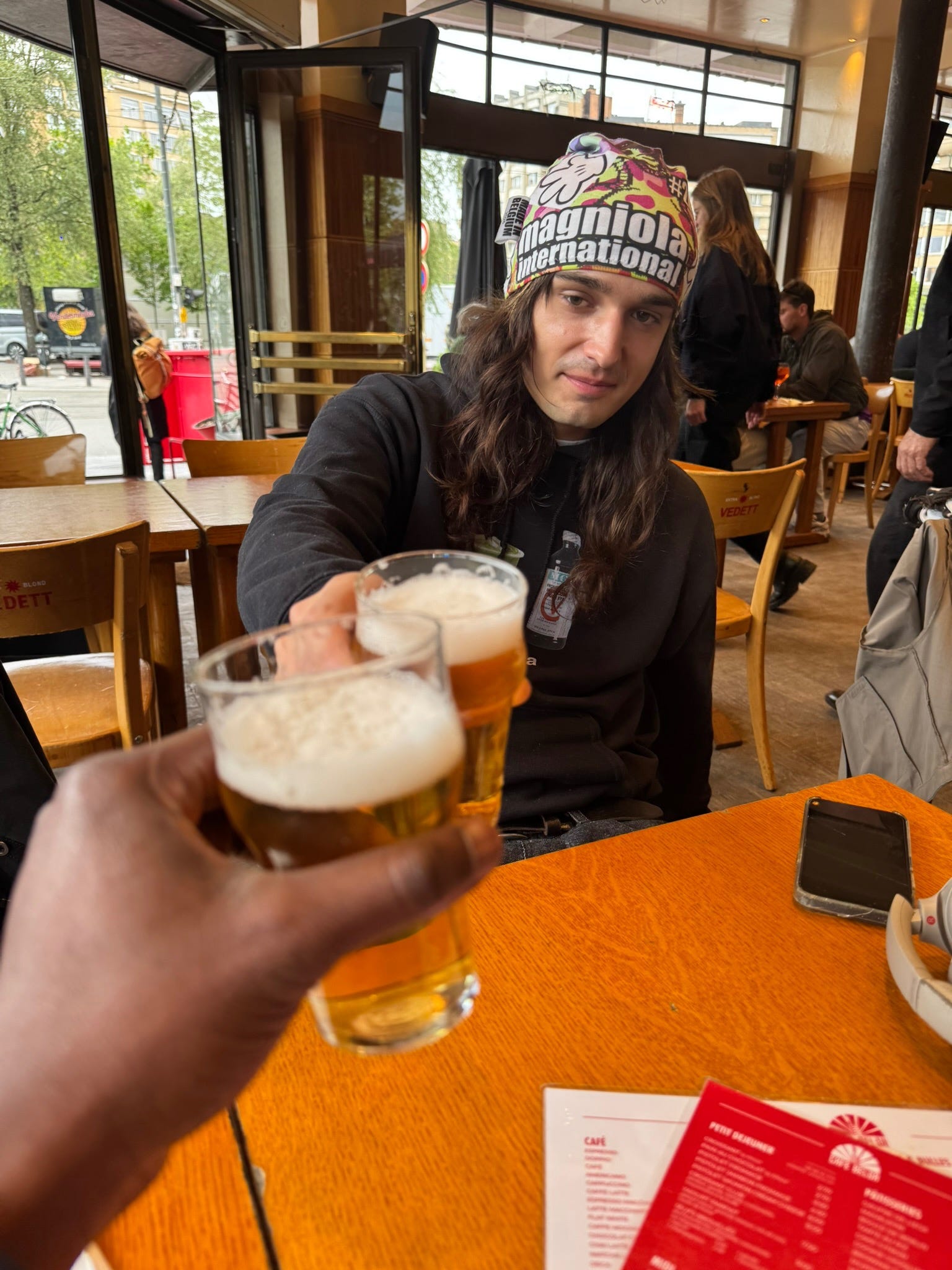
Then Eugene, in Ixelles, at a bar. Half pints, blondes and gingers, sitting out in the garden talking about this feeling of wanting to be part of a change, or to lead one, and agreeing that it all ties into each other somehow. Bumped into a famous rapper on the way, Swing. Passed the EU building, picked up more Vodys, and got on the train back to the festival.
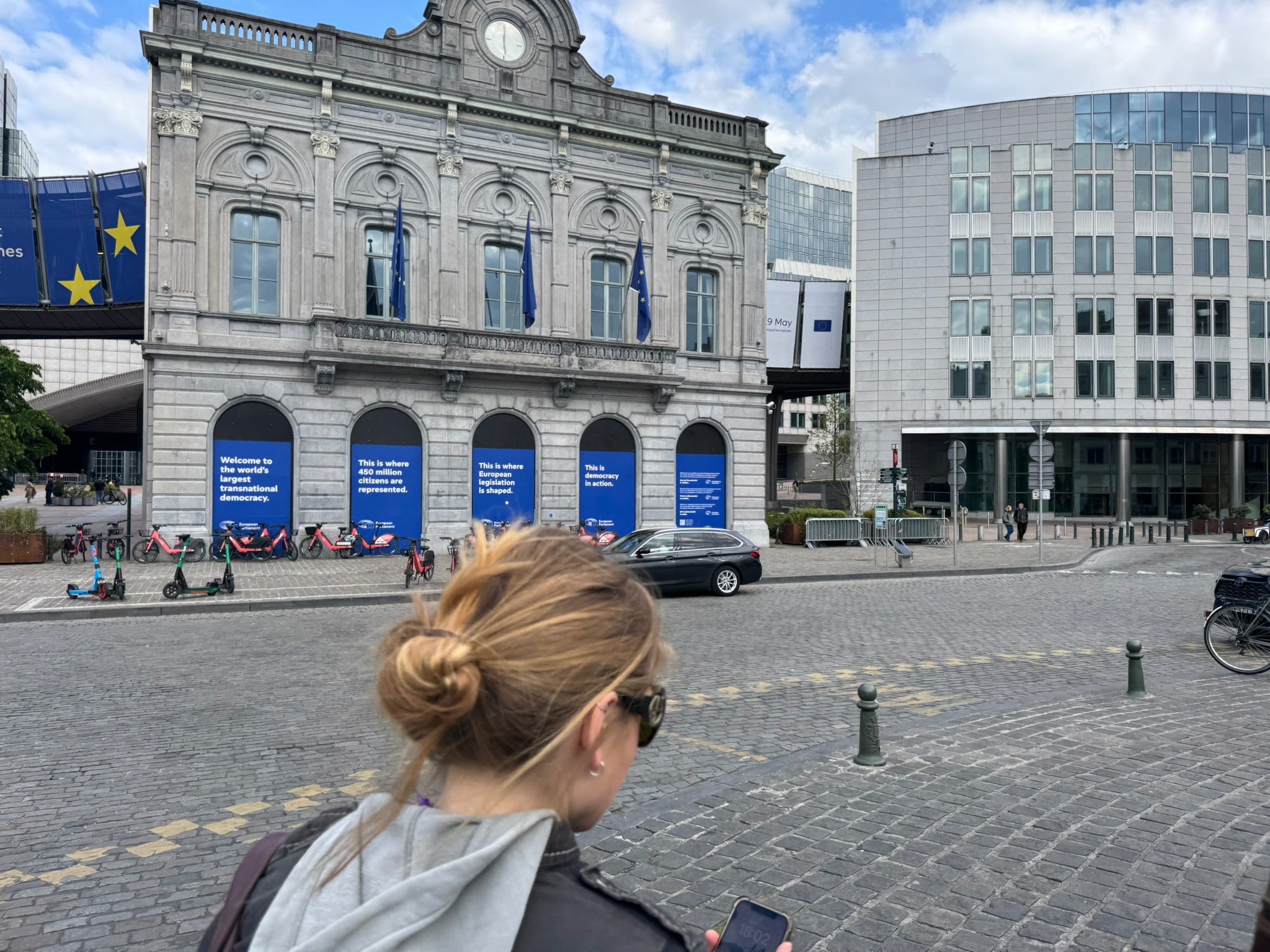
The transport is genuinely well thought out. A bus takes people from the station directly to the site, and the camping sits close by too, fine from what I heard. My plastic bag of doom, by the way, was a hit. People loved it. My one big summer festival hack = just take a scrunched up plastic bag with you, you can tie it to your belt loop, hang on to it, or throw it in a corner somewhere.
Then we chatted to Le Motel and his friends. A beautiful evening, and I’d decided I was going to hit every single stage in the festival. And I did.
You know what? I just needed a little bit more right now.
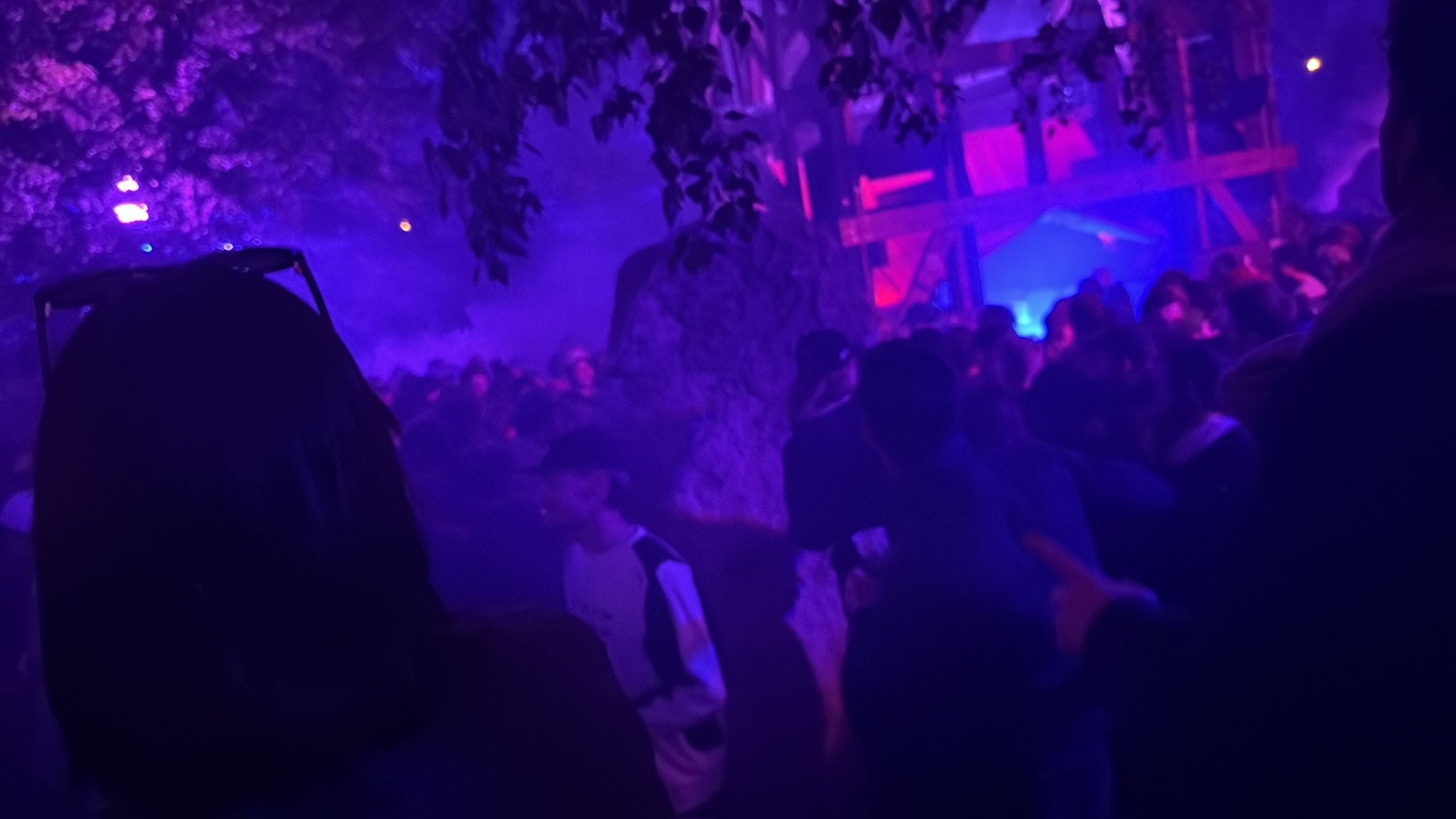
We were at the Ring stage, which was, as the name says, a ring. Tall beams spiking out around the perimeter, people packed inside in the round, and, to the detriment of security, a few of them hanging off the beams. Every room at Horst carried this air of mystery, since there was always hearsay about which were great and which were meh. Soleil Rouge and Circus I’d already done, so the Rain Room was the one left to find.
A little on the Rain Room. It’s a space they built around the idea of talks and programming, redesigned this year to seat people in the round so there’s no front or back, no hierarchy between speaker and crowd. There was a whole strand running through it across the weekend, plants reinstalled inside it grown by students from a local horticultural school. But that’s not how I found it.
I left the Ring and somehow ended up in a back office of the festival, where two Dutch cinematographers taught me to use their big pro cameras, let me shoot a few seconds on their Super 8, and then one of them kindly walked me over to the Rain Room. Going in, I was gobsmacked at how many people here were hidden away like marsupials, only to be discovered in the strangest context. To my right, a DJ booth. In front of me, a crowd of two hundred. The DJ was calling out for someone named Michael, and Romeo, or something, had been at it a while before I arrived. So I tapped the DJ and said I’d do whatever song they were lining up.
So there I was, in front of two hundred people, singing Physical by Dua Lipa.
It was a very serious performance.
The karaoke letters were half my height on a massive projector screen, four hundred eager eyes on me. And I think I gave one hell of a show. I was dancing, I was singing, I didn’t know a single word but I learnt them fast (it wasn’t hard to learn), and the crowd went pretty wild. I felt like I’d broken the simulation a little.
I didn’t know where I was. I didn’t know how I’d ended up there.
But more importantly, I was having a really good time.
looove